A visually refined academic blog file for orthopaedic education and professional content sharing.
Key Message
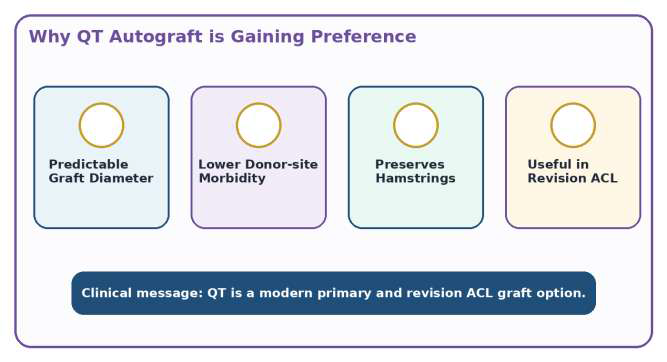
The quadriceps tendon autograft has moved from an underused secondary graft to a strong contemporary option for both primary and revision ACL reconstruction because it combines predictable size, favorable biomechanics, lower anterior knee morbidity, and fixation versatility.
Introduction
Anterior cruciate ligament (ACL) reconstruction is one of the most commonly performed procedures in sports medicine. Although bone–patellar tendon–bone (BPTB) and hamstring tendon (HT) grafts have historically been considered standard autograft choices, the quadriceps tendon (QT) autograft has gained increasing popularity in recent years because of its favorable biomechanical properties, predictable graft size, lower donor-site morbidity, and surgical versatility. Contemporary evidence now supports the QT as a reliable graft option in both primary and revision ACL reconstruction.
Clinical Relevance
For young athletes, pivoting sports, revision ACL reconstruction, and patients in whom anterior knee pain or hamstring weakness is a concern, QT autograft deserves serious consideration.
Historical Evolution
The quadriceps tendon was initially described decades ago but remained underutilized because surgeons were more familiar with BPTB grafts. Later, hamstring tendon grafts became popular due to reduced anterior knee pain
and improved cosmetic outcomes. However, concerns regarding hamstring weakness, graft size variability, and higher graft failure rates in young athletic populations led to renewed interest in the QT autograft.
Advancements in arthroscopic instrumentation, minimally invasive harvesting techniques, and fixation methods have significantly improved the reproducibility and safety of QT graft harvesting. Consequently, the QT has evolved from a secondary option to a major graft choice in contemporary ACL reconstruction.
Anatomy and Structural Characteristics
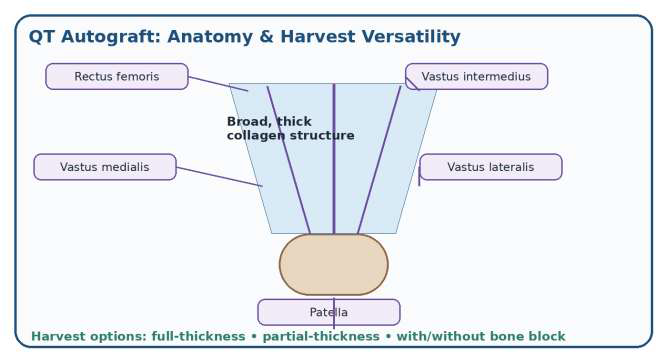
The quadriceps tendon is formed by the convergence of:
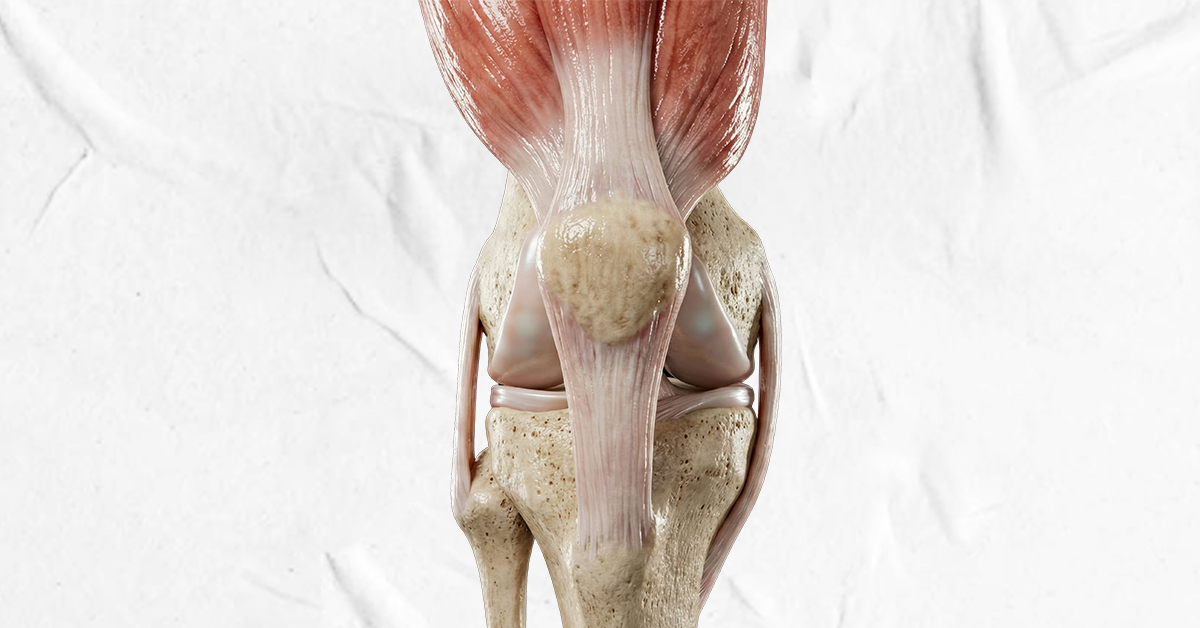
It inserts into the superior pole of the patella and possesses a broad and thick collagen structure. Compared with the patellar tendon, the QT demonstrates greater cross-sectional area and thickness, allowing harvest of a larger and more customizable graft.
The QT may be harvested:
This versatility provides flexibility in fixation strategies and surgical planning.
- Rectus femoris
- Vastus medialis
- Vastus lateralis
- Vastus intermedius
Harvest Flexibility
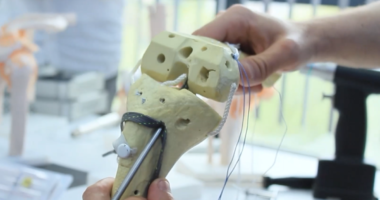
QT may be harvested as a full-thickness or partial-thickness graft, with or without a patellar bone block, allowing the surgeon to tailor graft choice and fixation to the clinical situation.
Biomechanical Advantages
- Predictable and customizable graft diameter
- High load-to-failure strength with favorable stiffness
- Excellent collagen organization
- Strong fixation potential
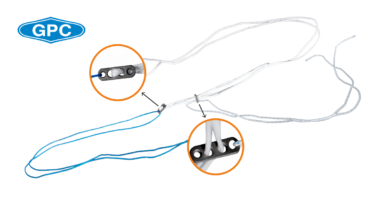
- Compatibility with suspensory, interference screw, and soft-tissue fixation methods
Compared with hamstring grafts, the QT reliably provides a larger graft diameter, which is especially valuable in young, high-demand patients and pivoting athletes.
Practical Comparison with Common ACL Autografts

Donor-Site Morbidity and Functional Preservation
Reduced Donor-Site Morbidity
Donor-site morbidity significantly influences patient satisfaction following ACL reconstruction.
Compared with BPTB grafts, QT harvesting results in:
Less anterior knee pain
Reduced kneeling discomfort
Lower extensor mechanism irritation
Improved postoperative comfort
Because the central patellar tendon remains intact, patients often tolerate rehabilitation more comfortably than after BPTB harvest.
This advantage is especially important in:
Laborers
Military personnel
Wrestlers
Religious practitioners
Occupations requiring frequent kneeling
Preservation of Hamstring Function
Hamstring tendons act as dynamic stabilizers of the knee. Harvesting semitendinosus and gracilis tendons may lead to:
Hamstring weakness
Reduced knee flexion strength
Delayed athletic recovery
The QT preserves hamstring integrity, thereby maintaining:
Knee flexor strength
Neuromuscular balance
Dynamic knee stability
This preservation is particularly advantageous in athletes participating in sprinting, pivoting, and cutting sports.
Role in Revision ACL Reconstruction
Revision ACL reconstruction presents unique challenges such as:
Tunnel widening
Previous graft harvest
Bone loss
Scar tissue
Hardware interference
The QT is particularly useful in these situations because it provides:
Large graft size
Excellent tissue quality
Flexible fixation options
Ability to harvest with or without a bone block
Its adaptability makes it one of the preferred graft choices in revision ACL surgery worldwide.
Revision ACL Pearl
In revision ACL surgery, QT is attractive because it offers high-quality tissue, large graft size, and adaptable fixation even when previous graft harvest or tunnel issues are present.
Clinical Outcomes and Current Evidence
Recent systematic reviews and meta-analyses have demonstrated that QT autografts provide:
Comparable knee stability
Similar graft survival
Equivalent patient-reported outcomes
Comparable return-to-sport rates
Importantly, QT grafts consistently show lower donor-site morbidity and reduced anterior knee pain compared with BPTB grafts.
Modern studies increasingly support the QT not only as a revision graft but also as a first-line graft option in primary ACL reconstruction.
Limitations and Surgical Considerations
- Temporary quadriceps weakness
- Learning curve during harvest
- Rare patellar fracture risk when a bone block is harvested
- Possible suprapatellar numbness
These issues are generally uncommon and can be minimized through careful harvest technique, appropriate graft sizing, and structured rehabilitation.
Future Perspectives
- Biological augmentation
- Internal brace constructs
- Enhanced fixation systems
- Optimized rehabilitation protocols
As surgeon familiarity grows and evidence continues to mature, the QT autograft is likely to become an even more prominent choice in modern ACL reconstruction.
Take-Home Points
- QT autograft provides predictable graft size and strong biomechanical properties.
- It reduces many donor-site problems associated with BPTB harvest.
- It preserves hamstring function, an important advantage for athletes.
- It is particularly valuable in revision ACL reconstruction.
- The main caution is temporary quadriceps weakness and the need for proper harvest technique.