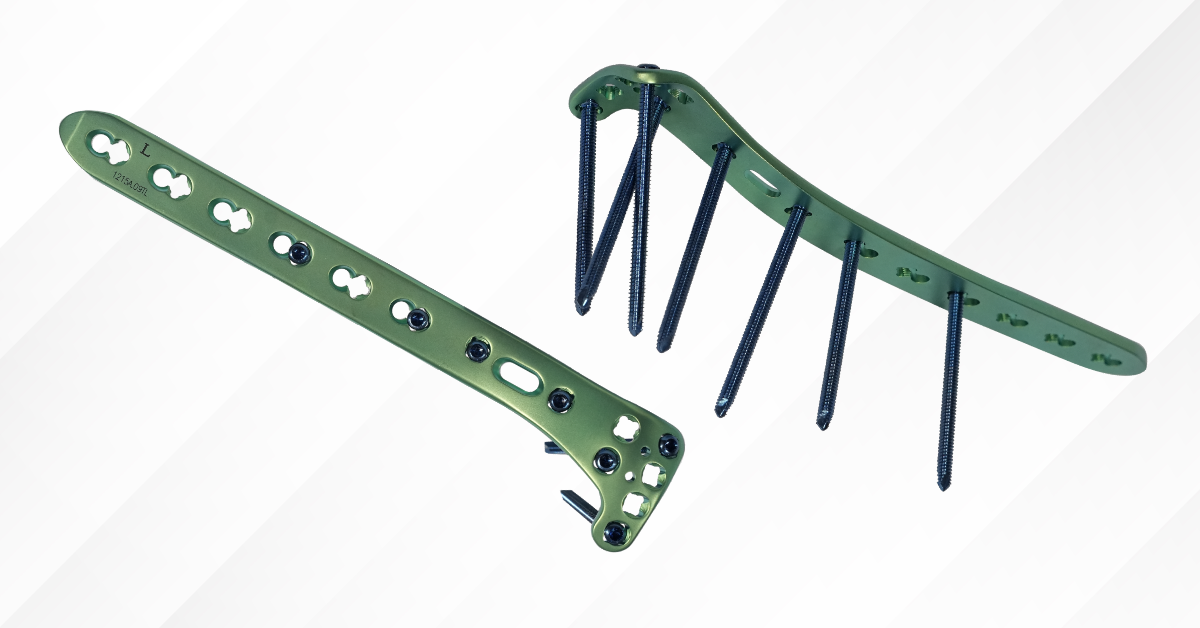

The healthcare industry, including the orthopedic sector, grapples with the dual challenges of maintaining high-quality product manufacturing while reducing its carbon footprint. The sector has evolved much in the last decade, especially creating innovative strategies to optimize operations, enhance patient outcomes and maintain its environmental impact.
The global market for orthopedic implants, which was valued at USD 45.19 billion in 2023, is projected to expand to USD 71.74 billion by 2032, indicating a significant dependence on these devices. In the United States, the expenditure on medical devices reached USD 173 billion in 2016, representing 5.2% of the total national health spending. Like many other sectors, Trauma and Orthopedics (T&O) faces challenges related to waste and inefficiency. Research conducted in the UK has revealed considerable levels of implant wastage during T&O procedures, with one particular study noting a 15% rise in surgical costs attributed to screw wastage. As implants are a major factor in surgical expenses, they present a crucial opportunity for cost reduction and environmental improvements. Tackling implant waste not only provides a means to decrease unnecessary costs for healthcare systems but also supports wider financial recovery initiatives. Additionally, minimizing implant wastage could greatly enhance environmental sustainability practices.
Key Challenges in Orthopedic Implant Sustainability:
- Material extraction and manufacturing emissions: The primary reason for environmental degradation is raw material mining and processing of these elements that require high energy and result in high carbon emissions.
- Surgical waste: Implant wastage is another challenge for the industry, where many components are unused and eventually turn into waste.
- Disposables and packaging: Single-use items account for a significant share of surgical waste, contributing to landfill burden and pollution.
Moreover, biomedical waste produced as a byproduct of pre and post production process enters landfills or incineration emits toxins and greenhouse gases.
Why Sustainable Orthopedic Solutions Matter?
Sustainable orthopedic solutions are not optional but a quintessentially necessary part of the implant industry. It goes past simple solutions like recycling bins, waste management, etc. It involves the entire lifecycle of implants and equipment – from procurement, sustainable orthopedic manufacturing, to reprocessing and circular design.
Environmental Impacts of Implant Production
High Carbon Footprint: The complex production and sterilization methods for orthopedic devices lead to considerable greenhouse gas emissions throughout the supply chain.
Material Waste: A lifecycle assessment comparing traditional production with additive manufacturing (3D printing) of orthopedic parts revealed a significant decrease in material waste – additive techniques lowered waste from 84.6% to 35% in a case study involving a knee implant.
Waste Within Clinical Settings
Surgical operations produce substantial waste: Operating theaters are some of the most resource-demanding sections of hospitals, frequently generating more waste than other medical specialties.
The economic impact of implant waste is high: Research shows that wasted implants increase procedure expenses and lead to excessive resource use. By investing in sustainable orthopedic solutions — such as streamlined intraoperative planning, precision-based inventory control, and innovations in materials — healthcare systems can lower both environmental and economic impacts while maintaining or improving patient care outcomes.
GPC Commitment to Sustainability
A significant contributor to the global orthopedic implant industry, GPC Medical Ltd. has been at the forefront of sustainable OEM practices while providing high-quality implants across the globe. With years of manufacturing experience, GPC Medical Ltd. emphasizes the incorporation of innovation, quality, and operational efficiency into its operations.
How GPC Medical Ltd. Contributes to Sustainability
- Eco-efficient manufacturing: The company designs its production processes to curtail waste and pursue eco-friendly solutions that minimize environmental impact.
- Quality assurance and longevity: By ensuring implants are durable and reliable, GPC Medical Ltd. helps reduce the frequency of revision surgeries, which in turn decreases additional resource use and manufacturing burden.
- OEM leadership: As an original equipment manufacturer of sustainable OEM orthopedic implants, GPC Medical Ltd. aligns product innovation with environmental stewardship, contributing to a circular economy in medical manufacturing.
The Future of Sustainable Orthopedic
Looking ahead, sustainable orthopedics is poised to become a defining trend in healthcare innovation. The orthopedic implant market — valued at approximately US $45.19 billion in 2023 and projected to grow significantly by 2032 — will need to reconcile growth with environmental responsibility.
Advanced materials science: Biodegradable and bioresorbable materials that minimize long-term waste and reduce the need for implant removal surgeries.
Circular product lifecycles: Devices designed for easier remanufacturing or recycling that reduce landfill dependence and resource extraction.
Precision medicine integration: Tailored implants produced via additive manufacturing, lowering material waste and optimizing outcomes.
Sustainability metrics integration: Use of LCAs and carbon accounting in product design and procurement to guide data-driven sustainability improvements.
Conclusion
The drive toward sustainability in orthopedics is much more than an environmental ideal – it’s a practical necessity. Reducing waste, embracing sustainable orthopedic manufacturing, and implementing long-term strategies for responsible production and use of medical implants will yield environmental, economic, and clinical benefits.