
In trauma orthopedics, selecting the right implant can significantly improve clinical outcomes and patient recovery timelines. Trauma cases are diverse – from high-energy fractures in long bones to complex peri-articular breaks. Several studies suggest that appropriate implant selection can materially impact union rates, infection risk, and functional recovery, underscoring the surgeon’s responsibility to weigh biomechanical demands against biological realities.
Orthopedic trauma implants aren’t interchangeable modules; they are precision solutions, each engineered for specific anatomical and biomechanical contexts. GPC Medical Ltd. makes its choices that involve an intricate understanding of biomechanics, material science, and surgical approach. Moreover, the implants are manufactured using advanced implant engineering and regulatory standards. The designs and development are based on structural decision strategies rather than heuristic guesses.
Why Implant Material Choices Matter in Trauma?
Beyond mechanical design, implant materials have a profound impact on clinical success. Titanium and stainless steel remain dominant, yet their properties differ significantly. Titanium alloys exhibit high biocompatibility and a lower modulus of elasticity, reducing stress shielding and promoting bone remodeling – crucial for younger, active patients. Stainless steel, by contrast, is cost-effective and robust but may invite different corrosion or fatigue profiles. Recent biomechanical reviews emphasize that titanium’s strength-to-weight ratio often makes it a preferred choice for load-bearing long bone fractures; however, the material selection must align with clinical priorities and available instrumentation.
Surgeons must also consider surface finishes, screw hole patterns, and instrumentation compatibility – factors that influence insertion torque, peri-implant stress distribution, and surgical workflow. With the advent of lockable constructs, these details carry even more weight in complex trauma scenarios.
Patient Assessment: The Foundation of Decision-Making
Before selecting an implant, a holistic patient assessment is essential. Key factors include:
Age and Bone Quality
- Younger patients with good bone density may tolerate a range of implants.
- Elderly patients with osteoporosis may require specialized implants (e.g., locking plates, intramedullary nails with augmented fixation) to avoid fixation failure.
Comorbidities and Healing Potential
- Diabetes, smoking, and vascular disease can impair healing.
- Poor soft tissue conditions may influence implant choice (e.g., minimally invasive options).
Activity Level and Functional Demands
- Implants for athletes may prioritize restoration of full function.
- Non-ambulating or low-demand patients may require simpler constructs.
Fracture Type and Severity
Detailed classification (e.g., AO/OTA) helps determine:
- Stability requirement,
- Need for compression,
- Potential for load sharing vs load bearing.
GPC Medical Ltd.: Integrating Quality into Trauma Implant Choices
GPC Medical Ltd. represents a modern example of how manufacturers support evidence-based implant selection with broad product portfolios and regulatory adherence. As one of India’s leading orthopedic implant producers, GPC supplies systems designed for diverse clinical needs and meets international benchmarks, including USFDA510(k)andCEcertifications — assuring surgeons of quality and traceability.
Their trauma-relevant products span major categories:
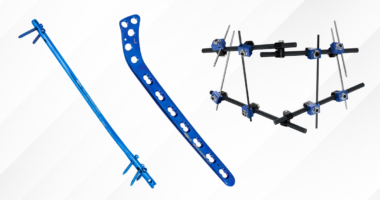
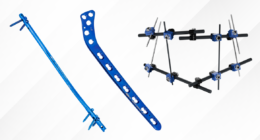
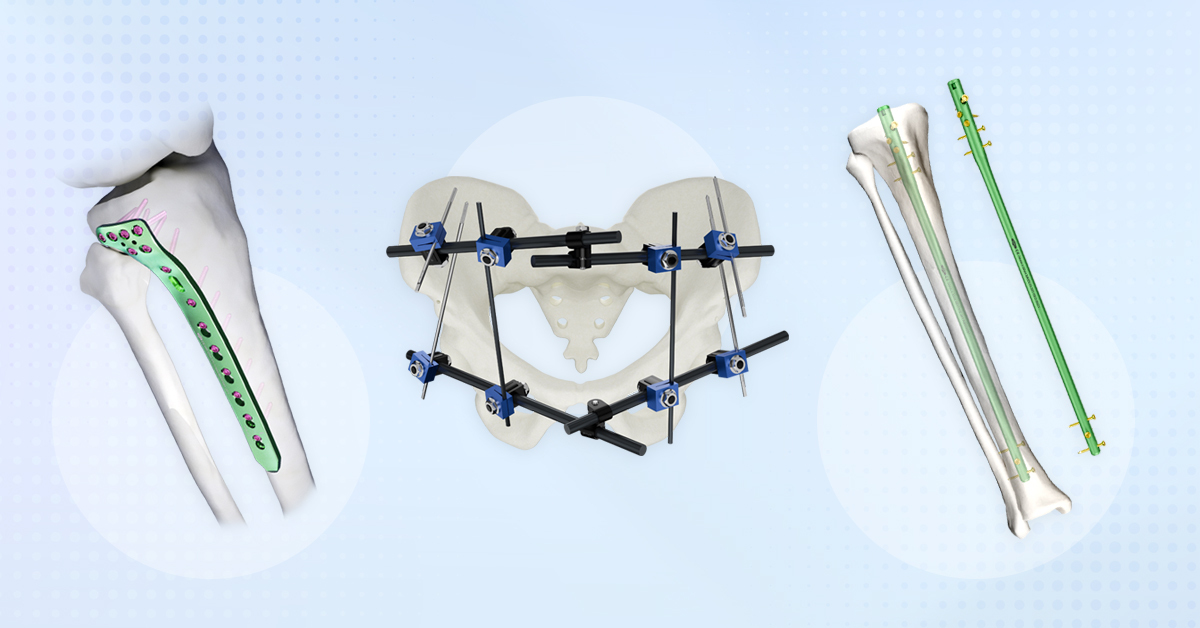
- fixLOCK Plating System: Anatomically contoured and straight plates for fracture fixation across small and large bone fragments.
- intraHEAL Intramedullary Nailing System: Inclusive solutions for femoral, tibial, and humeral fractures that support load sharing in diaphyseal breaks.
- exHEAL External Fixation System: Useful in open fractures or when soft tissue preservation is paramount.
- Pins, Wires & Staples: Auxiliary fixation tools for fragment stabilization.
- Instrumentation: Dedicated tools for precise screw insertion, drilling, and implant placement.
GPC’s philosophy blends engineeringprecision with clinical applicability: implants reflect anatomical understanding of all 206 bones, and the company’s interactive learning platform (GAITS) helps clinicians assimilate product nuances into practice.
Beyond Choice: Optimization and Outcomes
Ultimately, implant selection isn’t a singular act but a continuum of decisions: pre-operative planning, intra-operative execution, and post-operative rehabilitation all loop back to the initial choice. Surgeons who integrate structured decision pathways, robust product understanding, and patient-specific nuances significantly enhance outcomes.
Future directions include improved 3D imaging and templating software, enhanced biomaterials with corrosion resistance and fatigue performance, and potentially AI-driven implant selection aids. For now, blending clinical expertise with evidence and quality products – like those from GPC Medical Ltd. and their FDA-cleared portfolio – remains the gold standard for trauma implant practice.
Conclusion
Choosing the right implant in trauma cases demands precision, foresight, and structured judgment. By leveraging decision flowcharts, understanding biomechanical imperatives, and selecting high-quality implant systems like those offered by GPC Medical Ltd., surgeons can elevate care quality and enhance patient recovery trajectories. Thoughtful implant selection ultimately translates into fewer complications, greater mechanical reliability, and – crucially – better functional outcomes for patients navigating the aftermath of traumatic injury.