With the increased aging of the population and lifestyle-related spinal conditions worldwide, there has been intense demand for advanced solutions for spine implants. The use of spine implants has become an essential part of orthopedic and neurosurgical operations. The purpose of spine implants is to regain spinal stability and address conditions like deformities and neural compression that result from conditions such as degenerative disc disease, trauma to the spine, scoliosis, tumors, and infections.
Today, spine implants range in technology from conventional pedicle screw-rod systems to motion-preserving artificial disks. However, the current state of spine implants has resulted in success for a spine implant system manufacturer, requiring not only precise engineering principles for product performance and survival within a human body environment, but also mutual collaboration between manufacturers, the spinal implant exporter network, and regulatory authorities.
Classification of Spine Implant Systems and Their Applications
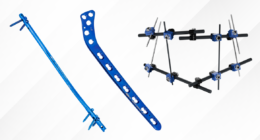
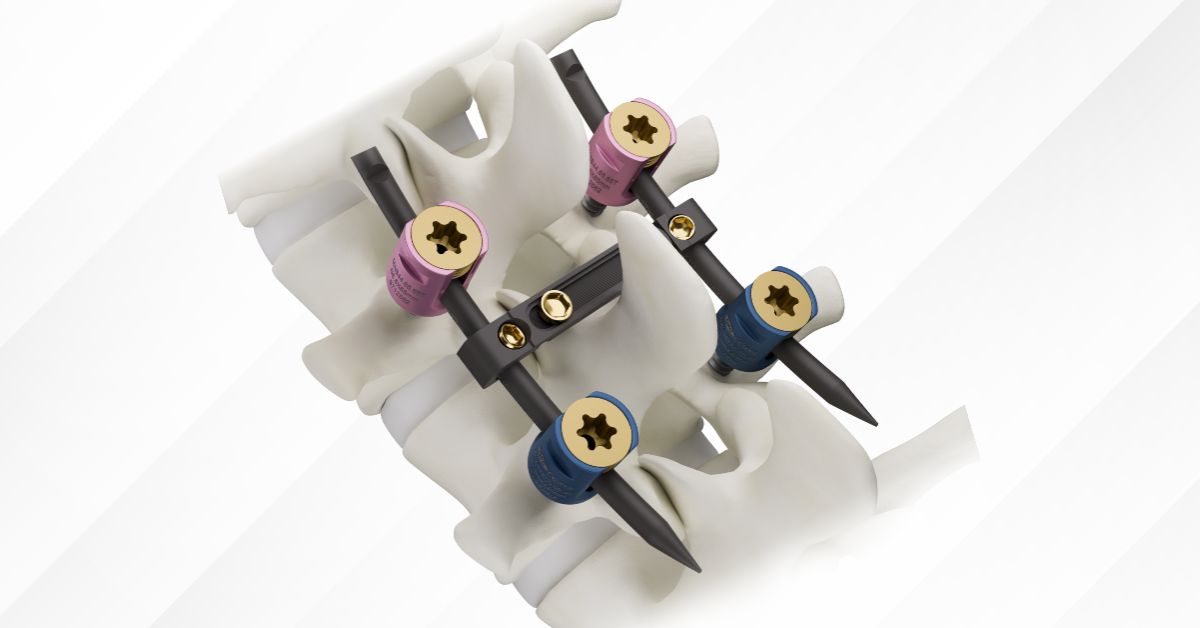
Spine implant systems are classified based on the regions of the spine in which they are placed and the function for which they are used. The various classifications include posterior fixation systems (pedicle screws and rods), anterior cervical plates, interbody fusion cages, and non-fusion or dynamic stabilization systems. All these are specifically designed for various pathological and biomechanical requirements of the spine.
In clinical practice, the type of implant to be used may depend on the level and side of the spine involved, bone density, severity of the pathologies, and the surgical method. A credible spine implant manufacturer should provide modular spine implants that offer the flexibility surgeons need during the procedure.
Key implant categories include:
- Pedicle screw and rod systems for thoracolumbar stabilization
- Cervical plates and screws for anterior cervical discectomy and fusion (ACDF)
- Interbody cages (PLIF, TLIF, ALIF, LLIF) for fusion and disc height restoration
- Artificial discs for motion preservation in select patients
Materials Used in Spine Implants: Engineering and Biocompatibility
Material science is an integral part of developing an efficient and durable spinal implant solution at GPC Medical. At GPC Medical, the company combines efficient engineering with proven biocompatible materials to create implants that provide post-operative stability along with sufficient biologic fixation. Material selection at GPC Medical hinges on biomechanical performance, biocompatibility, and surgeons’ clinical requirements.
GPC Medical utilizes the high-quality properties of titanium alloys, which possess a unique strength-to-weight ratio, corrosion resistance, and superior osseointegration properties. Meanwhile, Polyetheretherketone, or PEEK, is also widely used in interbody fusion products regarding its bone-like elasticity properties and radiolucency, allowing for accurate imaging of the site post-operatively. Indeed, advancements continue to ensure a promising future in spinal implants. As a forward-thinking spine implant system exporter, GPC Medical continuously invests in research to achieve the optimal balance between mechanical performance and biological compatibility.
Advanced materials used by GPC Medical and their clinical advantages:
- Titanium alloys: High fatigue resistance, corrosion protection, and strong bone integration for long-term fixation
- PEEK: Radiolucent, lightweight material that minimizes stress shielding and supports accurate imaging
- Porous titanium structures: Engineered to enhance osteoconductivity and accelerate fusion
- Cobalt-chromium alloys: High stiffness materials used selectively for complex deformity correction and load-intensive constructs
Surgical Techniques, Minimally Invasive Approaches and Outcomes
Advances in imaging, navigation, robotics and percutaneous techniques have moved many spine procedures from open exposures to minimally invasive approaches, reducing blood loss, hospital stay and tissue trauma. Interbody fusion procedures (TLIF, PLIF, ALIF, LLIF) and percutaneous pedicle screw fixation exemplify this trend. While short-term recovery metrics improve with minimally invasive surgery (MIS), long-term fusion rates and complication profiles depend on appropriate implant selection, bone quality and surgical skill. High-quality randomized data are mixed; therefore, surgeon experience and patient selection remain key determinants of outcome.
- MIS advantages: smaller incisions, faster early recovery, less blood loss.
- Navigation and robotics: improve implant placement accuracy but require training and capital investment.
- Outcome caveat: improved perioperative metrics do not fully eliminate hardware-related complications or nonunions.
Regulatory Landscape: GPC Medical’s Commitment to Compliance and Patient Safety
In the case of GPC Medical, regulatory requirements and ensuring patient safety are essential key considerations for developing and distributing spine implant systems on a global platform. In a highly regulated medical device industry environment, GPC Medical designs its products and production and preparation processes in accordance with international medical device regulations to ensure their reliability and efficacy in medical treatment across various medical platforms in different countries worldwide. In the United States, spine implant systems are cleared for entry through the 510(k) clearance process or the premarket approval process.
GPC Medical’s regulatory and safety framework includes:
- FDA-aligned compliance: Adherence to FDA 510(k) guidance, including performance data and clear risk communication
- Post-market vigilance: Structured adverse event reporting and ongoing product surveillance
- Quality management systems: Compliance with ISO 13485 and international medical device standards
- Global regulatory readiness: Support for country-specific approvals, transparent documentation, and clinical evidence review
Future Directions in Spine Implant Systems
The future of spine implant systems lies in personalization, smart technology, and biologically active designs. Patient-specific implants created through additive manufacturing, sensor-enabled “smart” implants, and advanced surface coatings are currently under development and early clinical evaluation.
For both manufacturers and exporters, long-term clinical data, registries, and evidence-based design will define market leadership. A forward-looking spinal implant exporter must align innovation with affordability and global accessibility.