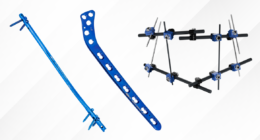
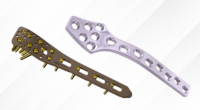
When we talk about locking and non-locking orthopedic implants, what we really mean are two fundamentally different philosophies for how implants stabilize broken bones. Both approaches aim to achieve internal fixation and allow bone healing; yet they differ in biomechanics, indications, cost, and complexity. This article delves into these differences while keeping the conversation real and laden with clinical insight.
What Are Locking and Non-Locking Orthopedic Implants?
Orthopedic implants are devices (plural – plates, screws, nails) used to stabilize fractured bones so that healing can occur without deformity or prolonged immobilization. When surgeons pick an implant, they often choose between locking and non-locking constructs.
Locking Implants
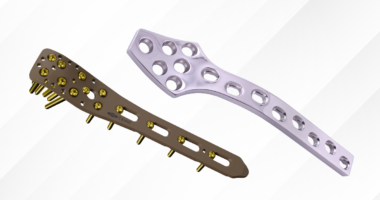
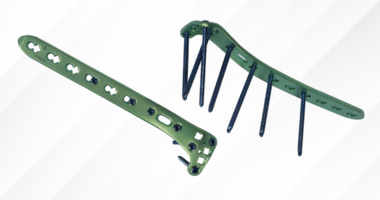
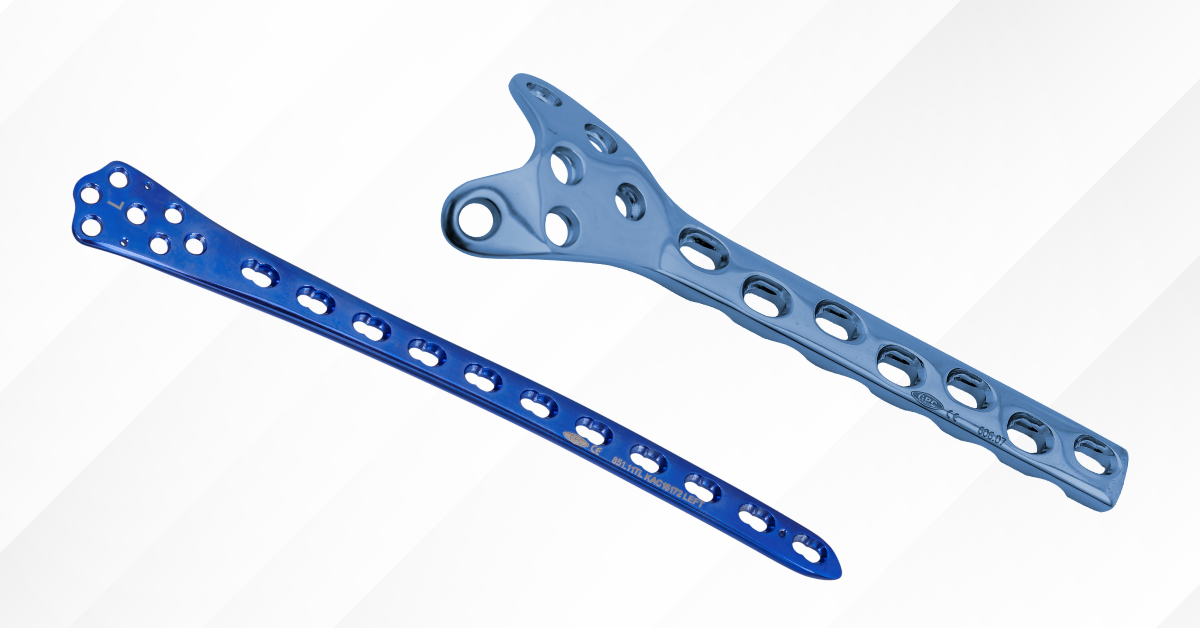
Locking plates/screws are engineered so that the screw head literally threads into the plate, creating a fixed-angle construct that acts as a stable “internal splint.” This configuration doesn’t rely on the bone to press against the plate for stability.
Non-Locking Implants
Non-locking implants depend on compression between the plate and bone. The screw tightens, pulling the plate toward the bone surface, and creates friction to stabilize the fracture. This works especially well where the bone quality is good and there’s healthy cortical contact.
Global Trends: How Widely Are These Devices Used?
The global market for orthopedic plates and screws highlights how rapidly the field is evolving as surgeons adopt new technologies and fracture fixation paradigms.
- In 2024, an estimated 80+ million orthopedic plates were implanted worldwide, with titanium plates accounting for nearly 63% due to their strength-to-weight ratio.
- Locking compression plates made up approximately 45% of total plate sales, reflecting their growing use in trauma settings, especially where stability is crucial (e.g., comminuted and osteoporotic fractures).
- Innovations like 3D-printed anatomically contoured plates have increased by 28% since 2021, improving fit and surgical outcomes.
Citation
Orthopedics Plates and Screws Market Size, Share, Growth, and Industry Analysis
Biomechanics and Healing: Why the Difference between Locking and Non-Locking Implants Matters
At its core, the difference between locking and non-locking implants lies in how they interact with bone:
- Load Transmission: Locking constructs share forces across a fixed-angle structure, which can reduce stress on individual screws and mitigate loosening, especially in weak bone.
- Dependence on Bone Quality: Non-locking systems rely heavily on bone contact and cortical grip for strength, making them less reliable in osteoporotic or comminuted fractures.
- Soft Tissue Preservation: Because locking plates don’t require tight bone contact, they can preserve periosteal blood supply and reduce disruption to the bone’s biology.
Moreover, the fixed-angle nature of locking systems makes them biomechanically superior in resisting angular and shear forces, particularly in complex fractures or in patients with low bone density. But this doesn’t make non-locking implants obsolete – they still excel in simple trauma with good bone quality.
Clinical Scenarios: When Which Implant Shines
Choosing between locking and non-locking systems isn’t arbitrary—it depends on the fracture pattern, bone health, and surgical goals. Let’s break it down:
Situations Favoring Locking Implants
Locking systems are often preferred when:
- The fracture is multi-fragmentary or peri-articular
- Bone quality is compromised (e.g., osteoporosis)
- There’s limited bone surface available for compression
- Anatomical contouring would be difficult without rigid fixation
Because screws lock into the plate, micro-motion is reduced, lowering the chance of screw back-out even when the bone is weak.
Situations Favoring Non-Locking Implants
Non-locking implants are ideal when:
- The fracture pattern is simple and well aligned
- Bone quality is robust, allowing good cortical grip
- Primary compression across fracture sites is desired
- Cost and resource considerations are important
The basic concept of compressing bone segments to promote healing has stood the test of time, making non-locking implants reliable in many traditional settings.
GPC Medical Ltd.: Manufacturing, Quality & Global Export
As a leading manufacturer, GPC produces a comprehensive range of orthopaedic implants, including both locking and non-locking plating systems, intramedullary nailing systems, spinal implants, and trauma instruments.
What sets them apart is their regulatory compliance: their orthopedic devices, including locking/non-locking plates and screws, are among the broadest ranges receiving US FDA 510(k), CE, MDSAP, ISO 9001 and ISO 13485 certifications, meeting stringent global standards.
Export reach is extensive — with products delivered to 110+ countries, GPC’s quality and affordability contribute to their adoption by healthcare professionals across diverse markets.
To know more about our Locking and Non-Locking Implants, please go through:
https://www.indianorthopaedic.com
Why the Difference between Locking and Non-Locking Implants Matters?
At its core, the difference between locking and non-locking implants lies in how they interact with bone:
- Load Transmission: Locking constructs share forces across a fixed-angle structure, which can reduce stress on individual screws and mitigate loosening, especially in weak bone.
- Dependence on Bone Quality: Non-locking systems rely heavily on bone contact and cortical grip for strength, making them less reliable in osteoporotic or comminuted fractures.
- Soft Tissue Preservation: Because locking plates don’t require tight bone contact, they can preserve periosteal blood supply and reduce disruption to the bone’s biology.
What Evidence Says About Outcomes?
Across various studies, research comparing outcomes of locking versus non-locking implants points to a nuanced picture:
- In a randomized trial of humerus fractures, locking plates showed slightly better functional scores, though both groups healed successfully.
- Some clinical trials show similar union rates between locking and non-locking plates.
- Implant removal due to hardware irritation tended to be higher with non-locking systems, while infection rates were sometimes higher with locking systems.
- Biomechanical studies confirm greater stability and lower displacement under load for locking constructs.
Citation