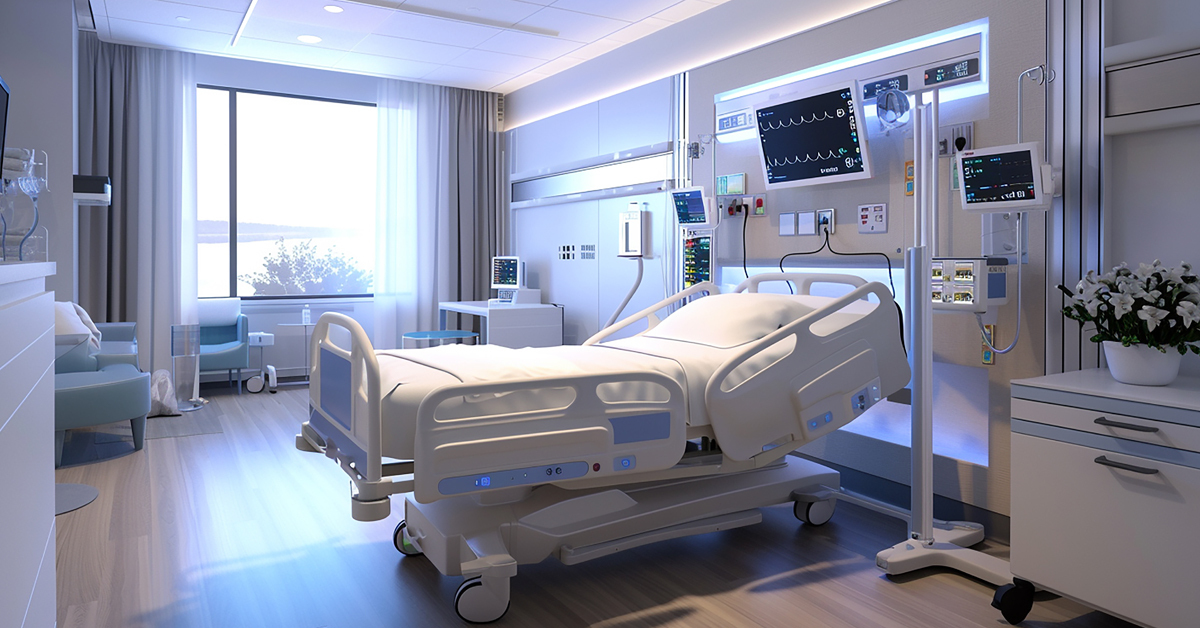

The role of hospital furniture is much beyond just providing functional equipment to the medical environment. It has an immediate effect on the recovery results of patients, operational efficiency of the staff, the success of infection control and even the reputation and financial status of the healthcare facility. For example, a hospital bed that prevents pressure ulcers will not only save thousands in treatment costs but also improve patient satisfaction scores. Similarly, a well-designed ergonomic nursing station decreases the staff’s tiredness and thus reduces turnover.
The hospital furniture industry, which was worth $8. 4 billion worldwide in 2023 as per Grand View Research, is expected to reach $12. 7 billion by 2030. The increase will be powered by hospital construction in emerging markets, replacement cycles in the developed countries, and an increasing consciousness of the fact that hospital furniture quality impacts clinical outcomes in a very measurable manner. The next generation hospital furniture uses advanced materials, antimicrobial surfaces, ergonomic designs that are validated through user research, and incorporates smart technologies that detect patient movement, can change positions automatically and can also notify the staff in case of possible falls or pressure injuries.
Understanding Patient Needs: Comfort as Clinical Imperative
Hospital furniture comfort doesn’t just provide a bit of luxury to patients, it actually makes a big difference to their health – a bad and uncomfortable patient will feel more pain, loss in sleeping, which slows down healing, less mobility, which can cause other issues, and their psychological well-being will be affected so that recovery becomes much harder for them.
The research published in the Journal of Patient Safety in 2024 that examined 12,847 hospital admissions found that hospitals that introduced high-end therapeutic beds with the ability to change patient positions automatically recorded a 34% lower rate of pressure ulcers and a 28% less ventilator-associated pneumonia compared with only standard manual beds.
Key patient comfort considerations in furniture selection:
- Pressure redistribution: Therapeutic mattress surfaces prevent ulcers; reduce incidence by 34%
- Positioning flexibility: Multi-position beds and chairs accommodate diverse medical conditions
- Independent access: Bedside tables and overbed tables at proper heights reduce dependency
- Noise reduction: Quiet motors and locking mechanisms prevent sleep disruption
- Safety features: Exit alarms, side rails, bed-exit monitoring reduce falls and injuries
- Dignity preservation: Privacy screens, accessible storage, and comfortable seating maintain patient autonomy
Focus on Functionality & Clinical Efficiency
Hospital furniture should not only serve patients – it must also support medical staff in delivering efficient care. From ICU beds to trolleys and bedside cabinets, every element should enhance workflow.
Hospitals and clinics account for over 52% of healthcare furniture demand, highlighting the need for high-performance furniture in busy clinical environments.
Efficient furniture reduces time spent on patient handling, improves accessibility to equipment, and minimizes physical strain on healthcare workers.
Efficiency-driven benefits:
- Faster patient handling and repositioning
- Improved access to medical tools and supplies
- Reduced staff fatigue and injuries
- Better space utilization in wards and ICUs
Infection Control: Material Selection and Surface Design
Each year, the Centers for Disease Control and Prevention (CDC) reports titled 2024 Healthcare Infection is pointing out that Healthcare-associated infections (HAIs) lead to the illness of nearly 1. 7 million patients in the US annually, 99 000 of whom die from the complications, and the extra healthcare costs amount to $28-45 billion. The hospital furniture is a big factor in how infections spread. Places where germs can hide even after cleaning, textile materials that get stained with bodily fluids and are difficult to disinfect, and the parts of a piece of furniture made in a way that makes it impossible to clean, these are just some of the factors that keep the contamination cycles going.
Infection control features in hospital furniture:
- Seamless construction: Eliminates crevices harboring pathogens; enables thorough cleaning
- Non-porous surfaces: Medical-grade vinyl and coated metals withstand repeated disinfection
- Antimicrobial materials: Copper-infused surfaces kill 99.9% of bacteria within 2 hours
- Removable components: Mattress covers, cushions are removable for laundering or replacement
- Chemical resistance: Materials withstand bleach, quaternary ammonium, and hydrogen peroxide cleaners
- HAI reduction: Antimicrobial furniture contributes to 23% reduction in healthcare-associated infections
Staff Efficiency and Ergonomics: Reducing Caregiver Burden
There are many injuries sustained by healthcare workers that occur due to lifting and repositioning of patients, particularly musculoskeletal disorders. Hospital furniture that lessens the physical exertion of caregivers, such as electric beds with height adjustments preventing caregiver back strains, bariatric equipment allowing higher weights without lifting, and chairs with tilt mechanisms allowing safe transfers, effectively affects staff safety, job satisfaction, and retention, even more so considering the great shortage of nurses in this era.
If injury prevention is not enough, furniture design also impacts workflow efficiency. Beds that have centralized controls and can be operated from both sides save nurses from the frequent walking around of beds when adjusting positions. At the bedside, workstations that are part of furniture allow documentation to be done at point of care instead of having to make trips to central stations.
Staff efficiency considerations in furniture selection:
- Electric height adjustment: Reduces caregiver back strain; lowers injury rates by eliminating bending
- Bariatric capacity: Equipment rated to 500-750 lbs prevents improvised lifting injuries
- Accessible controls: Centralized bed controls reduce unnecessary staff movement
- Integrated workstations: Point-of-care documentation saves 47 minutes per shift in direct care time
- Easy mobility: Casters and lightweight materials enable efficient room rearrangement and cleaning
- Intuitive operation: Simple controls reduce training time and minimize user errors
Regulatory Compliance and Safety Standards
Hospital furniture is required to meet several regulatory frameworks simultaneously that cover medical devices, fire safety, accessibility, and patient safety. Such compliance may sometimes be ignored by budget furniture manufacturers when they decide to cut costs. In the US, hospital beds that are capable of meeting the FDA medical device requirements must be equipped with anti-entrapment features (which refer to gaps that could trap the patient’s head, limbs or the whole body), brakes that prevent the bed from unintended movements, and side rails that comply with the dimensional standards, which maintain a balance between fall prevention and entrapment risk.
Critical regulatory and safety compliance:
- FDA medical device standards: Entrapment prevention, brake systems, side rail dimensions
- IEC 60601 electrical safety: Protection against shock, EMI, and mechanical hazards in powered equipment
- TB 133 flammability: Upholstered furniture must resist fully developed fires
- NFPA 701 flame propagation: Draperies and curtains meet flame spread limits
- ADA accessibility: Height and transfer requirements for patients with mobility limitations
- Compliance documentation: Manufacturers must provide certification of standards compliance
GPC Medical Ltd.: Comprehensive Hospital Furniture Solutions
GPC Medical Ltd. has made its mark as one of the top hospital furniture providers in the industry by understanding first that hospitals need an extensive range of products to cover patient comfort, infection control, staff working efficiency, and compliance with regulations. To top it all, the quality of manufacturing and the support from the customer that goes along with the whole product lifecycle.
Hospital furniture by the company includes full ward equipment such as hospital beds, examination couches, blood donor chairs, hospital cabinets, operating tables, ICU beds, stretcher trolleys, and much more.
GPC Medical Ltd.’s Hospital Furniture Advantages:
- Comprehensive portfolio: Complete ward furniture from beds to bedside cabinets and examination tables
- Safety compliance: Meets international medical device and safety standards with documentation
- Durable construction: Powder-coated steel frames resist corrosion; heavy-duty mechanisms ensure longevity
- Infection control design: Seamless construction, medical-grade materials, removable, cleanable components
- Quality assurance: ISO 13485:2016 certified manufacturing with systematic testing
- Global availability: Distributed across 150+ countries with consistent quality standards
- Complete solutions: Single-source procurement simplifies purchasing and service coordination
Conclusion
Choosing the right hospital furniture is a decision that influences the healing of patients, the efficiency of the staff, and the general quality of healthcare. As the worldwide market grows swiftly and hospitals put more emphasis on patient-centric care, the need for furniture that is ergonomic, long-lasting, hygienic, and equipped with technology is increasing.